Don't Call Me If You're a Quitter
Walking around Tbilisi on a wet morning, I ran into interesting graffiti on an old brick patch: “Dont [call] me if you’re a Quitter.”
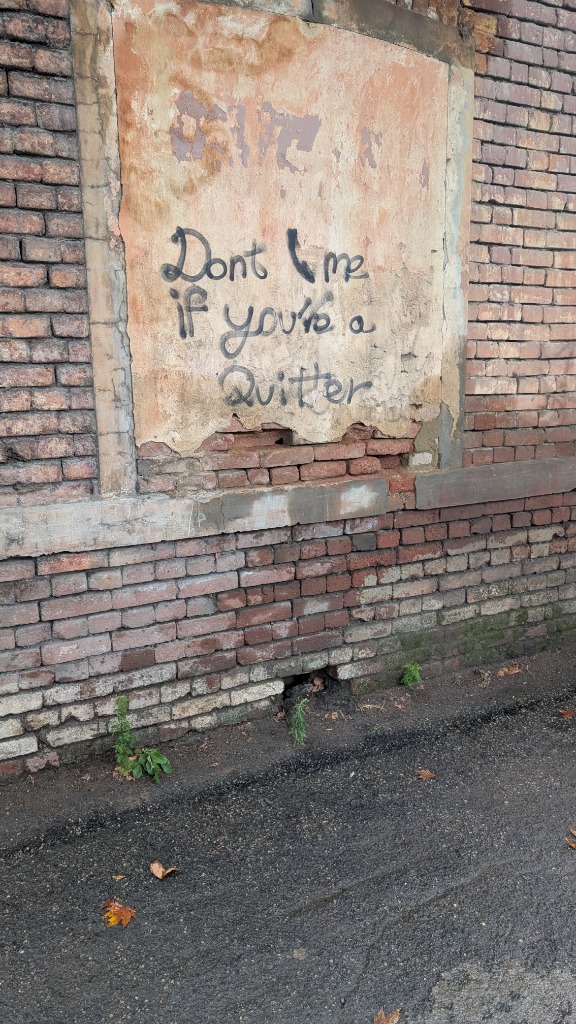
It is hard not to read that through the lens of what people here have been through. Most people I have met have been genuinely kind, but you can sense a fatigue from broken promises—a quiet skepticism toward the idea that collective action or institutional reform will actually improve daily life. It is not a critique unique to this region; it feels familiar to the dynamics back home in the United States, where one faction looks to the state to absorb catastrophic risks that could otherwise wipe out a family’s savings, while another remains skeptical of almost any public intervention unless it safeguards the interests of those who already need the least protection. Reality is always messier than broad categories, but that is the surface impression on a walk like this.
Historically, Georgia had a real window of self-determination after the Russian Empire collapsed in 1918. That initial republic lasted barely three years before the Red Army moved in, locking the country into the Soviet sphere for seven decades. Some people describe a more independent Georgia, at least culturally. The Soviet collapse in the 1990s did not wipe the slate clean, either. It brought territorial fractures, Russian military presence, and a steady current of foreign capital and disinformation designed to keep the landscape unsettled.
Now, modern market forces shape the urban core. Private investment builds dense, multi-family housing, but the resulting capital flows push property values far beyond the reach of the local workforce.
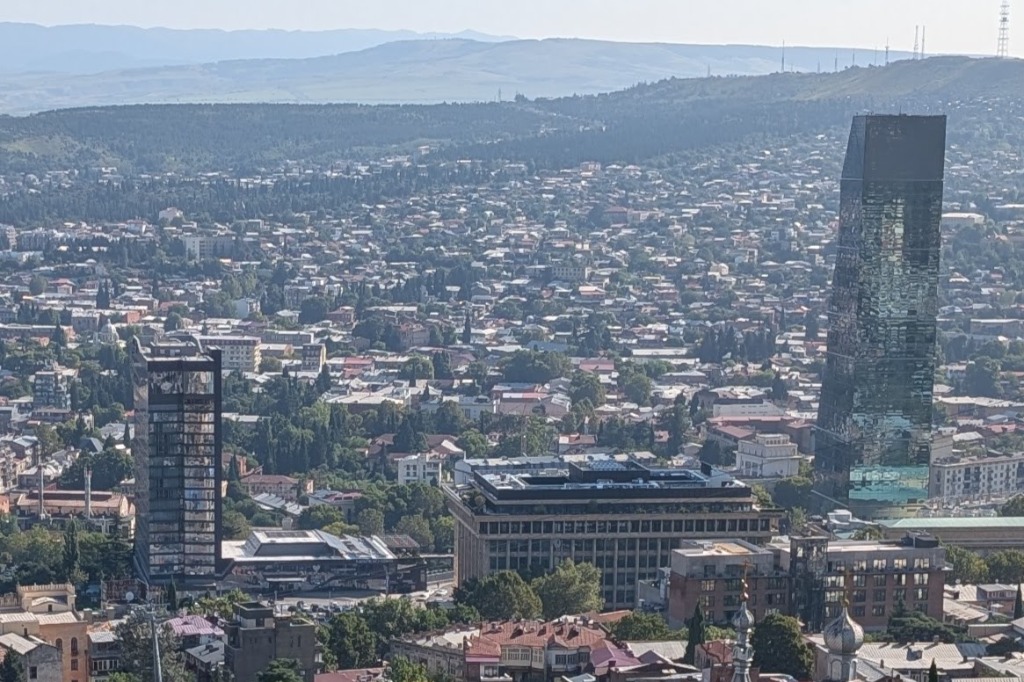
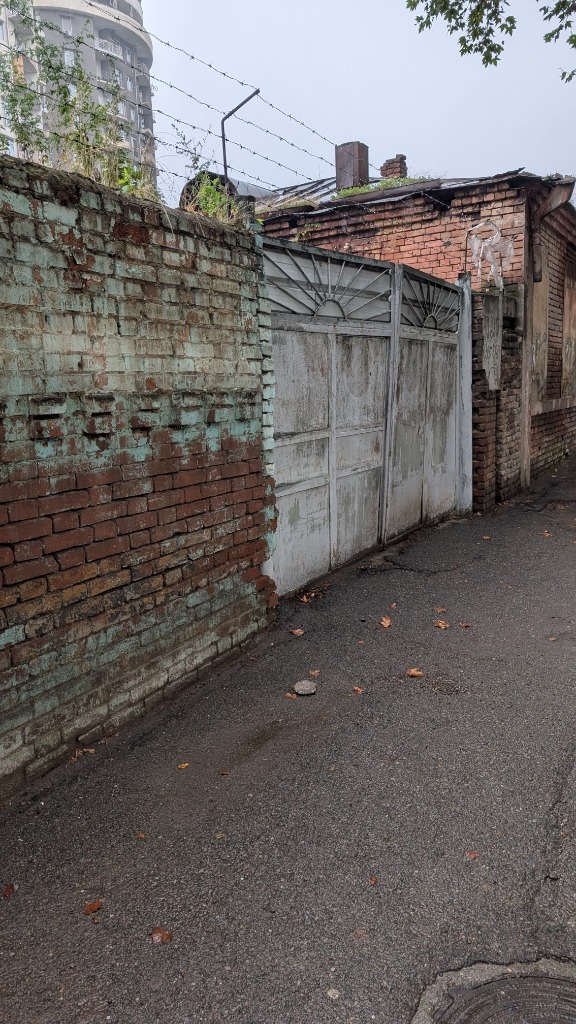
You see that friction across the neighborhood fabric. The streets hold an uncurated mix—crumbling brickwork, corrugated tin repairs, wild greenery reclaiming neglected corners, and twenty-year-old sedans parked beside gut-renovated flats.
The underlying arithmetic is difficult to parse. When everyday costs trend toward European benchmarks while domestic salaries remain low, the pressure on ordinary households is constant.
Seen in that context, a scrawl on a crumbling wall does not read like generic motivational advice. I see a strong culture and a hopeful outlook. I hope that the Georgia that emerges in the next hundred years is just as determined and proud.