The Legend of CRISPR: Long Ago and Far Away a Young Prokaryote...
Sort of a fairytale…
Almost everything about CRISPR sounds magical, even its origins. It began billions of years ago as an evolutionary arms race between some of the first living organisms—bacteria—and the viruses that hunt them (bacteriophages).
When a virus attacked, it injected its own genetic code into the bacterium. While few survived, some evolved an incredible defense: they would find the invading viral DNA, snip out a specific piece, and save it. They stored this genetic “memory” inside their own DNA, in a special, repeating section called a CRISPR array. It became a “most wanted” gallery of past attackers.
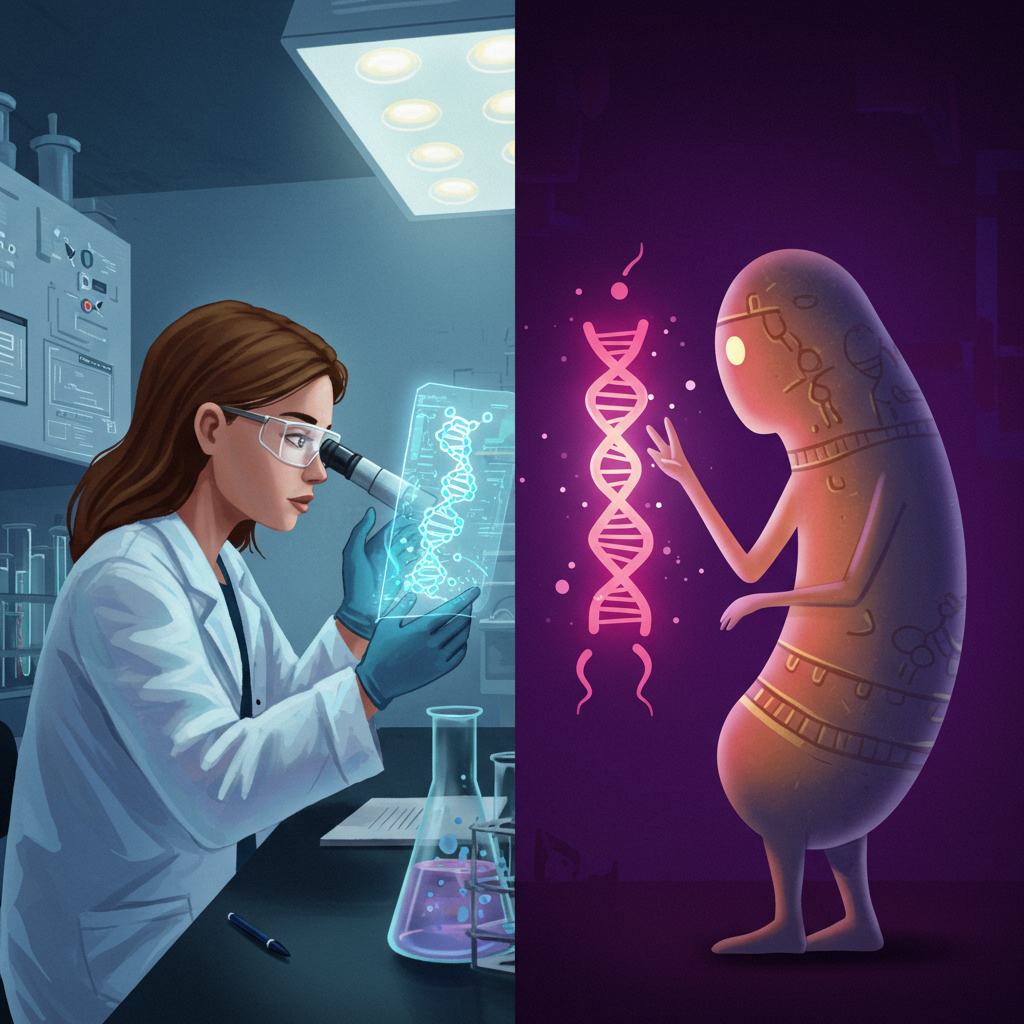
If that virus ever attacked again, the bacterium would quickly create a “guide” molecule (RNA) from that stored memory. This guide would team up with a powerful “scissor” enzyme (like the famous Cas9). This complex would then patrol the cell, and if it found a perfect match to the invader’s DNA, the Cas9 scissors would slice that viral DNA apart, neutralizing the threat.
Billions of years later, humans learned this secret. We figured out how to hijack this ancient bacterial system. By creating our own custom “guide RNA,” we can now tell those molecular scissors exactly where to cut, allowing us to edit the genome of almost any living thing and opening the door to curing genetic diseases.
This week I read that a child that had virtually no chance of survival, seems to have been saved by this technology. They call the kid KJ, and if it worked for him they might be able to save thousands or even millions of other lives. The speficific disease is called AADC deficiency and it is a rare genetic disorder that affects the brain’s ability to produce dopamine and serotonin. But there is good reason to believe the same techniques could be used to treat other diseases.
That is not even the only use for CRISPR. Here is a python library used to help identify similar looking plants potentially to help identify invasive species more reliably. I am sure there will be countless other uses for this technology. If you are interested in exploring more with python, here is a link to the DepMap portal. It is a great resource for exploring CRISPR in the context of cancer research. A great primer on Bioinformatics is the Biopython library